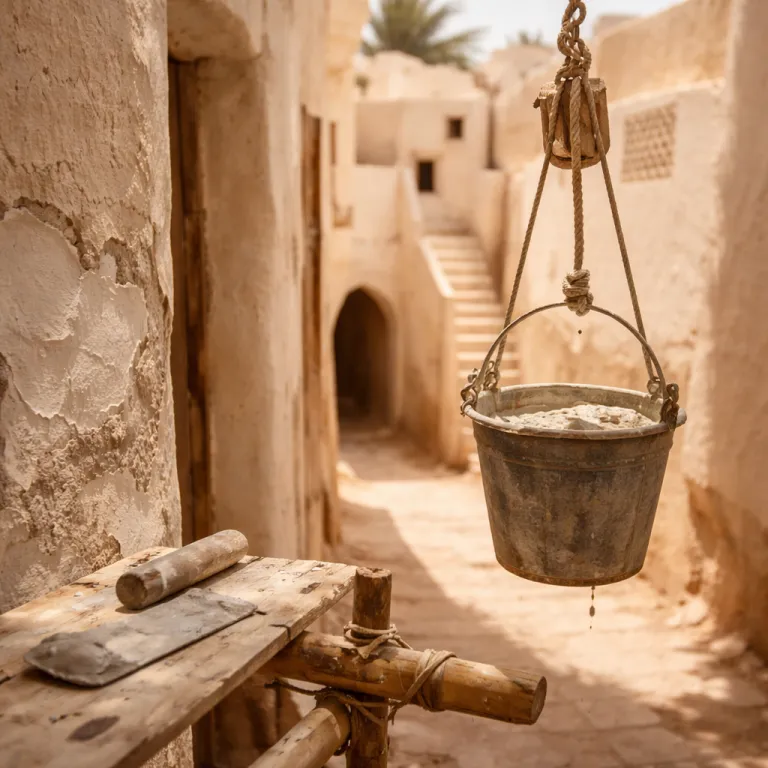
Ghardaïa and the M’Zab Valley architecture that shaped modern design
Stand on the ridge above Ghardaïa and the M’Zab Valley architecture unfolds like a sand coloured amphitheatre. The five fortified cities step down the hill in concentric rings, each ancient settlement calibrated to the light, heat and winds of the Algerian Sahara. For a design focused traveller, this is not just another desert town; it is a living manifesto of traditional urban intelligence and climate responsive planning.
The Mozabite community built this valley in Algeria as a defensive and spiritual refuge, turning harsh desert conditions into a framework for daily life. Houses lean into each other for shade, narrow alleys funnel breezes, and every courtyard becomes a private microclimate that softens the sun. When you walk these settlements, Ghardaïa and M’Zab Valley architecture stop being abstract phrases and become a tactile experience under your fingertips, from rough plastered walls to cool stone thresholds.
Le Corbusier visited the region in the 1930s while travelling through North Africa, observing how each city and town in the M’Zab Valley wrapped itself around a hilltop mosque and used compact forms to respond to climate. In his 1933 travel sketches later reproduced in Le Voyage d’Orient and notes cited by Archnet’s dossier on Ghardaïa, he highlighted density, sun angles and cross ventilation in this vernacular urbanism. Today, architects still reference this Mozabite urban model when they talk about passive cooling, compact planning and the balance between private and communal life in hot arid cities.
Inside the ksour: passive cooling, light and community centric planning
Walk into Beni Isguen at first light and you feel the temperature drop as soon as you enter the first ring of houses. The Ghardaïa–M’Zab Valley building tradition relies on thick walls, tiny openings and layered streets to keep interiors cool while the desert outside begins to glare. This is passive cooling at its purest, developed long before air conditioning and still shaping how local families organise their daily life and seasonal routines.
Each of the five settlements in the valley follows a similar logic, yet every city has its own nuance in layout and light. The mosque crowns the hill, then come the houses in concentric terraces, then the palm groves and irrigation system that feed the local economy. As one local guide explained to us, “the palm grove is our roof and our pantry,” a phrase that captures how this concentric urban planning keeps the community close to its spiritual core while protecting the precious palm groves that turn this corner of Algeria into a habitable oasis.
For travellers who care about design, this is where theory meets practice in the most tangible way. You see how an ancient heritage site can still guide contemporary sustainable development, from water management to shared courtyards and shaded narrow alleys that double as social corridors. If you are planning a wider Algerian itinerary, pair your M’Zab stay with a coastal contrast at a refined Mediterranean resort such as the Sheraton Club des Pins, and consult our broader guide to the best luxury hotels in Algeria for context on how hospitality is evolving.
Le Corbusier, modernism and the M’Zab lesson for today’s cities
Le Corbusier’s visits to Ghardaïa and the wider M’Zab Valley were not casual detours; they were field observations that fed directly into his thinking about modern cities. He noted how Mozabite architecture used simple forms, whitewashed planes and tight urban grain to respond to climate rather than fashion. Those observations would later surface in his theories on high density housing, sun control and cross ventilation, discussed in his North African travel notebooks and echoed in lectures compiled in Précisions sur un état présent de l’architecture.
When you look at the skyline of Ghardaïa from the palm groves, the connection becomes obvious in the way volumes stack and streets interlock. The fortified cities of Beni Isguen, Bou Noura, Melika and El Atteuf are not frozen museums, but evolving urban laboratories where history, culture and contemporary pressures collide. As UNESCO’s listing notes in its Statement of Outstanding Universal Value, what is unique about M’Zab Valley architecture is its adaptation to the desert environment, with fortified hilltop mosques and concentric housing that still function as living communities.
For a solo traveller, this context changes how you move through each town and heritage site in the valley’s UNESCO landscape. You are not just admiring ancient walls; you are reading an early draft of sustainable urban development that still outperforms many modern cities in terms of climate comfort. To understand how this resonates with today’s tourism, look at the recent surge in visitors analysed in our report on Ghardaïa’s growing appeal, which tracks how design curious travellers are reshaping the local economy and encouraging heritage based services.
How to visit: guided walks, photography etiquette and private spaces
Exploring Ghardaïa and M’Zab Valley architecture works best when you accept that this is a living religious community, not an open air museum. The Mozabites maintain clear rules about access, photography and behaviour, designed to protect both cultural heritage and daily life. Respecting those rules is not a constraint; it is your ticket to a more authentic and relaxed experience in this conservative yet welcoming corner of the Algerian Sahara.
Guided tours with licensed local experts are strongly recommended, especially in Beni Isguen where independent wandering is restricted. Your guide will navigate the narrow alleys, indicate where photography is allowed and explain how each settlement organises its social and commercial activity. They will also point out details you might miss alone, from discreet ventilation slots to the way each urban stair aligns with the mosque in this UNESCO listed ensemble, and suggest vantage points ideal for respectful architectural photography.
Private homes are rarely open, but some families occasionally host visitors for tea or a meal arranged through trusted intermediaries. When that happens, you see how Mozabite architecture works from the inside, with rooms stacked vertically around a central void that manages light and time. Dress modestly, ask before taking any portrait and remember that this heritage site is first and foremost a place of worship and family life, not a backdrop for social media or intrusive street photography.
Where to stay: from ksour edge guesthouses to Algerian luxury circuits
Accommodation around Ghardaïa sits in a sweet spot between traditional character and modern comfort, though you will not find global chains inside the ancient ksour. Most luxury inclined travellers base themselves in well run local hotels on the outskirts of the city, then dip into the valley settlements by day with a guide. This keeps the fortified cities free from heavy traffic while giving visitors reliable services, air conditioning and stable Wi Fi for planning onward travel.
Look for properties that reference Ghardaïa and M’Zab Valley architecture in their design without mimicking it superficially. The best addresses use local materials, shaded courtyards and palm filled gardens, echoing the palm groves that ring the heritage site. Some higher end options can arrange private transfers, curated urban walks and even architecture focused itineraries that link the valley in Algeria with other design rich regions such as Algiers, Constantine or the Saharan oases further south.
For a longer Algerian journey, many of our readers combine a few nights in Ghardaïa with coastal or capital stays booked through our curated platform. A refined Mediterranean base such as the Sheraton Club des Pins near Algiers, reviewed in our in depth property guide, pairs well with the desert’s quiet intensity. This kind of itinerary lets you experience both the urban planning genius of the M’Zab settlements and the contemporary hospitality scene that is slowly redefining luxury in Algeria.
Heritage under pressure: conservation, tourism and the future of the valley
The M’Zab Valley’s status as a UNESCO World Heritage Site brings both protection and pressure. Increased visitor numbers support the local economy, yet they also strain fragile urban fabric, water resources and traditional ways of life. Conservation here is not just about restoring walls; it is about managing development so that the valley remains liveable for its residents and continues to embody its Outstanding Universal Value.
Modern materials, new roads and changing aspirations are reshaping the edges of Ghardaïa and its satellite towns. Some younger Mozabites move towards more contemporary housing models, while elders defend the logic of Mozabite architecture and its time tested irrigation system. Local authorities and community leaders are working to balance these forces, using planning tools to keep the fortified cities intact while allowing necessary growth in surrounding areas and buffer zones.
For travellers, the most responsible choice is to support guides, hotels and artisans who respect cultural heritage and invest back into the settlements. Choose walking over driving inside the UNESCO perimeter, stay in properties that manage water carefully and be mindful of how your presence affects daily life in these ancient cities. The reward is access to a landscape where history, culture, architecture and the desert still speak in a clear, unfiltered voice, and where your visit can contribute positively to long term conservation.
Why design lovers should prioritise Ghardaïa over better known destinations
Many travellers default to Marrakech or Tunis when they think about North African design, yet Ghardaïa and M’Zab Valley architecture offer a more concentrated lesson in climate adapted urbanism. Here, every line in the skyline, every bend in the narrow alleys, serves a purpose shaped by sun, wind and community ritual. The result is a series of settlements where form and function are inseparable, and where the desert is collaborator rather than enemy in the making of habitable space.
Unlike some over visited medinas, the valley still feels intimate enough for meaningful encounters with local residents. You can sit under the palm groves at the edge of town and watch the rhythm of daily life without feeling like you are in a theme park. The fortified cities of Beni Isguen, Bou Noura and their neighbours remain working communities, not stage sets, which makes every architectural detail part of a living system that still guides behaviour and social interaction.
For a solo explorer, this combination of authenticity, depth and relative calm is rare in the Algerian Sahara. You leave with more than photographs of a picturesque valley in Algeria; you carry a new understanding of how ancient urban planning can inform the cities of tomorrow. That is why, on our platform, we consistently rank Ghardaïa among the most rewarding destinations for travellers who care as much about architecture and cultural heritage as they do about thread count and contemporary comfort.
Key figures on Ghardaïa and the M’Zab Valley
- The M’Zab Valley contains five historic ksour, or fortified cities, recognised together as a UNESCO World Heritage Site, which underlines the global importance of this compact desert landscape.
- Ghardaïa was founded in the eleventh century and later became the administrative and commercial hub of the valley, concentrating services, markets and many accommodation options for visitors.
- Tourism to Ghardaïa has grown steadily in recent seasons; local authorities have reported annual visitor numbers in the low tens of thousands, with some municipal bulletins citing figures approaching 12,000 visitors in a single year, signalling rising interest in Mozabite architecture and desert heritage travel. Always check the latest statistics from the Algerian Ministry of Tourism for updated figures.
- The five main settlements — Ghardaïa, Beni Isguen, Melika, El Atteuf and Bou Noura — were established between the early eleventh and mid fourteenth centuries, creating a network of defensive and spiritual centres across the valley.
- UNESCO’s recognition of the M’Zab ensemble has encouraged conservation projects focused on irrigation systems, palm groves and traditional housing, helping to stabilise the local economy while preserving cultural heritage.
FAQ about Ghardaïa, the M’Zab Valley and where to stay
What makes Ghardaïa and the M’Zab Valley unique for architecture lovers?
The M’Zab Valley is renowned for its compact fortified cities, concentric urban planning and climate adapted Mozabite architecture. Each settlement is built around a hilltop mosque, with houses cascading down in rings that maximise shade and ventilation. This combination of defensive design, spiritual focus and environmental intelligence is rare even within the wider Algerian Sahara and makes the valley a reference point in discussions of sustainable desert urbanism.
Who are the Mozabites and how do they shape daily life in the valley?
The Mozabites are a Berber community practising Ibadi Islam, and they are the historic founders and current guardians of the valley’s settlements. Their religious and social rules influence everything from market hours to photography etiquette inside Beni Isguen and other towns. Visitors experience a living cultural heritage where faith, commerce and architecture remain tightly interwoven, and where community councils still play a central role in decision making.
Why was the M’Zab Valley architecture developed in this specific way?
The architecture of Ghardaïa and its neighbouring cities evolved as a response to persecution, climate and security needs. Communities fleeing conflict needed a defensible yet sustainable settlement model that could function in the desert with limited water. As summarised in academic work on the region and reflected in UNESCO’s documentation, M’Zab Valley architecture developed to create sustainable, defensive communities in the harsh desert environment.
How should travellers approach photography and behaviour in Beni Isguen?
Beni Isguen is one of the most conservative towns in the UNESCO area, with clear rules about visitor conduct. Photography is restricted in many streets and markets, and travellers are expected to dress modestly and move with a licensed guide. Respecting these norms ensures a smoother experience and helps maintain trust between residents and guests, while also protecting the dignity and privacy of local families.
Where should luxury oriented travellers stay when visiting Ghardaïa?
Most higher end visitors base themselves in comfortable local hotels on the outskirts of Ghardaïa, using them as a springboard for day trips into the fortified cities. These properties typically offer air conditioning, reliable services and curated excursions into the valley’s settlements. For a broader Algerian itinerary, many travellers combine a stay here with coastal luxury hotels booked through specialised platforms that focus on premium accommodation in Algeria and can coordinate multi stop circuits.
References
- UNESCO World Heritage Centre – Official listing for the M’Zab Valley and its ksour, including the Statement of Outstanding Universal Value, inscription criteria (ii) and (v), and conservation reports.
- Archnet – Architectural and historical documentation on Ghardaïa and Mozabite settlements, with plans, photographs and scholarly essays referencing Le Corbusier’s sketches and observations.
- Algerian Ministry of Tourism – Visitor statistics and heritage management information for Ghardaïa and the wider M’Zab region, updated periodically in official communiqués and regional reports.