Eco lodges in the Sahara: what sustainability really means in Algeria
Algeria eco tourism is not a slogan on a brochure. In this country the concept is being tested in the most fragile of environments, where the Sahara desert stretches in landscapes vast enough to swallow careless tourism models whole. For luxury travelers, the emerging eco lodge scene in the Algerian desert is where ideals of responsible travel either hold or collapse.
In the Algerian Saharan context an eco lodge is less about design trends and more about how a property sits within natural systems. Water use, waste management, energy sources and the relationship with local communities define whether a stay supports eco tourism or quietly undermines it. The best projects treat the Sahara desert as a living national park scale ecosystem, not a backdrop for Instagram.
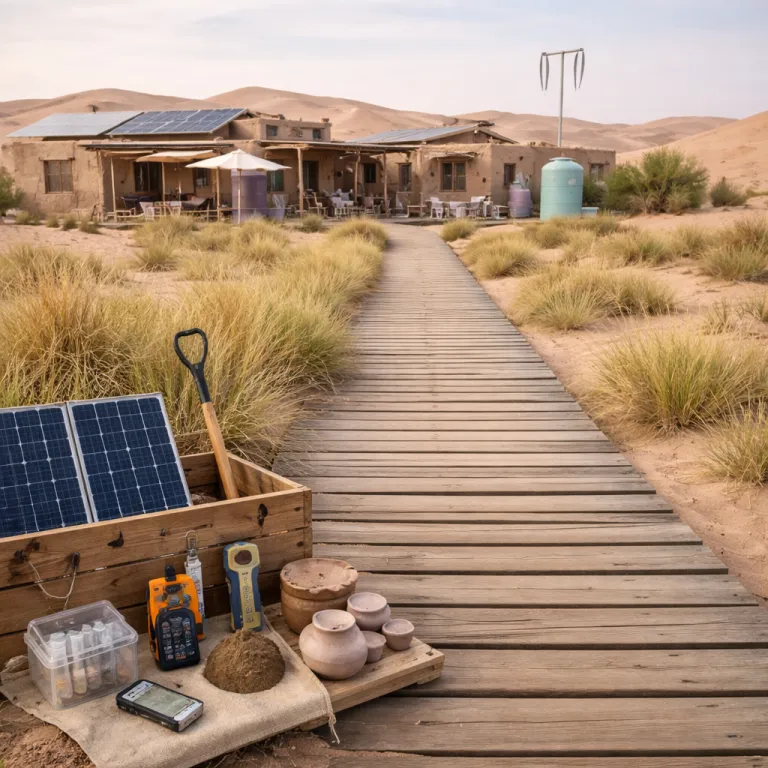
Across southern Algeria, small desert camps near Tassili n’Ajjer and Ahaggar National Park are experimenting with solar power, grey water reuse and low impact construction. These eco minded destinations often use traditional ksar style stone or adobe, which blends with the natural beauty instead of competing with it. When done well, an eco lodge becomes a discreet part of Algeria natural heritage rather than an intrusion into breathtaking landscapes.
True Algeria eco tourism also depends on who benefits economically from your stay. Properties that employ local guides, source food from nearby oases and pay fair wages to Tuareg and Mozabite staff embed tourism development inside existing cultural heritage. When you book, ask directly how much of your nightly rate remains in the local country context and how the lodge contributes to surrounding communities.
The Algerian government, as regulator, has started to frame eco tourism within national strategies that balance tourism Algeria growth with conservation. Policy documents now reference responsible travel standards for Sahara desert operations, especially around Tassili n’Ajjer and Ahaggar park zones. Yet enforcement remains uneven, which means luxury travelers must act as their own auditors when choosing where to sleep under the stars.
For solo explorers this is both a challenge and an opportunity. You can use your booking power to reward eco lodges that treat national parks as partners, not marketing props. Instead of relying on vague “green” claims, run a quick checklist: how the lodge manages water in an arid region, what happens to solid and liquid waste, whether renewable energy is used, and how local communities share in the benefits of your stay.
Hidden Saharan gems: from Tassili n’Ajjer to the M’Zab Valley
Some of the most compelling Algeria eco tourism experiences unfold far from the classic Algiers coastal circuit. Tassili n’Ajjer National Park, a UNESCO listed plateau near the Libyan border, is the country’s flagship for eco minded travel. Here, sandstone forests, prehistoric rock shelters and silent canyons create one of the world’s most surreal natural destinations.
In Tassili n’Ajjer, eco tourism is inseparable from rock art and prehistoric rock heritage. Thousands of engraved and painted panels show cattle, giraffes and human figures, evidence that this Sahara desert was once a green savannah. Any responsible travel itinerary must treat these sites as open air museums, with strict limits on group size, touching and flash photography.
The conservation model in this national park offers both inspiration and warning. On one hand, guided nature tours run by licensed Algerian tour operators help control access and channel income to local communities. On the other, limited infrastructure and patchy monitoring mean that tourism Algeria ambitions could outpace the park’s capacity if visitor numbers surge without careful planning.
Southwest of Algiers, the M’Zab Valley around Ghardaïa has become a bellwether for Algeria eco tourism demand. Ghardaïa’s 32 percent foreign visitor share, reported by the local tourism office in recent seasons and echoed in regional tourism bulletins, signals that international travelers are ready to explore lesser known spots Algeria wide, especially where cultural heritage and natural beauty intersect. For an in depth look at how this oasis city is evolving, read this analysis of Ghardaïa’s rising visitor numbers and what they mean for sustainable development.
Further north, Djurdjura National Park in Kabylia shows another face of Algeria natural landscapes. Here, cedar forests, limestone peaks and deep gorges contrast sharply with the Sahara desert yet belong to the same national parks network. Hiking routes, wildlife observation and small guesthouses in Kabyle villages demonstrate how eco tourism can thrive in cooler mountain climates as well as in desert parks.
Across these regions, the common thread is the role of local communities as hosts. When you choose lodges and guides who respect local customs, you help ensure that tourism supports both environmental conservation and socio economic development. As one national travel guide puts it, “What are popular ecotourism destinations in Algeria? Tassili n’Ajjer National Park, M’Zab Valley, Djurdjura National Park.”
Luxury, sustainability and the 8 million visitor question
Algeria has set an ambitious target of welcoming millions more visitors, positioning tourism as a pillar of national development. For Algeria eco tourism this raises a blunt question; can fragile Sahara desert ecosystems and high altitude parks absorb that growth without losing their soul. The answer will depend on how quickly responsible travel standards move from conference talking points into on the ground practice.
Events such as SIAHA have already placed sustainable tourism on the national agenda, aligning with Adventure Travel Trade Association recognition of Algeria as a conservation focused destination. Government agencies now speak openly about integrating eco tourism into broader economic plans, especially around Tassili n’Ajjer, Ahaggar national areas and Djurdjura national forests. Yet policy alone will not protect prehistoric rock art or the natural beauty of remote wadis if hotel construction races ahead of environmental impact assessments.
For luxury travelers, this is where property choice becomes a form of quiet activism. Opting for smaller, well managed eco lodges near national parks rather than large, resource heavy resorts sends a clear market signal. Independent field reports from desert camps near Djanet, for example, describe lodges running almost entirely on solar power, with basic meters showing daily production in the range of 20–30 kW and simple systems that divert more than half of organic waste into compost for oasis gardens.
Compared with Oman’s Wahiba Sands camps, Jordan’s Wadi Rum tented suites or Namibia’s desert conservancy lodges, Algeria is still in the early chapters of its eco lodge story. That can be an advantage; there is time to avoid overbuilt mistakes and to embed responsible travel into every new project. As one park ranger in Tassili n’Ajjer explained during a recent stakeholder workshop, “If we plan slowly and listen to local people, tourism can help us guard the plateau instead of damaging it.”
Solo explorers should interrogate marketing language carefully. When a property claims to be eco, ask how it manages water in a country where desert aquifers are finite, how it treats waste in remote parks, and how it contributes to cultural heritage preservation. A truly sustainable stay in Algeria natural regions will have clear answers, not vague promises about “green values”.
As demand grows, the risk is that hidden gems become overrun spots Algeria wide, losing the quiet that makes them special. The opportunity is that each new eco lodge becomes a micro hub of conservation, funding ranger patrols, trail maintenance and heritage education. Your booking choices help decide which path this country follows.
How to book eco conscious stays in Algeria’s hidden gems
Turning Algeria eco tourism ideals into a real itinerary starts with how you search and book. Begin by mapping the national parks and protected areas you want to explore, from Tassili n’Ajjer and Ahaggar national plateaus to Djurdjura national ridges. Then look for properties that position themselves as gateways to these destinations rather than generic desert hotels.
On myalgeriastay.com we treat each listing as part of a broader travel guide to the country’s eco tourism landscape. You will find detailed notes on proximity to park boundaries, relationships with local guides and any partnerships with conservation projects. For urban nights before or after your Sahara desert journey, our editorial on an elegant base for Algeria based travelers shows how we evaluate comfort, character and responsible operations even outside national parks.
When comparing options, pay attention to how each property talks about Algeria natural heritage. Serious operators reference specific parks, trails and cultural heritage sites, and they explain how they minimize impact on natural beauty and breathtaking landscapes. They also tend to offer guided nature tours, community based tourism activities and wildlife observation that align with eco tourism best practice.
Ask whether your stay includes contributions to Ahaggar or Tassili conservation funds, or whether guides receive ongoing training in responsible travel. In remote Sahara desert camps, check that vehicles follow established tracks to protect fragile crusts and that group sizes remain small. In mountain parks, look for clear trail etiquette and waste carry out policies that keep Djurdjura national paths pristine.
Solo explorers who value independence can still travel responsibly. Use sustainable transport where possible, support local businesses for meals and crafts, and respect local customs in every oasis or mountain village. Algeria eco tourism thrives when travelers treat the country as a shared home rather than a backdrop for content.
Finally, remember that eco tourism in Algeria is an ongoing project, not a finished product. Protected areas in Algeria now number around twenty, according to national environment and forestry statistics and summaries on Algeria.com, and hundreds of thermal springs and wild valleys remain outside formal park systems. Surveys of hydrothermal resources, cited by VisitAlgeria and academic studies, identify roughly 282 thermal springs that could support carefully managed wellness travel. Your feedback to hoteliers and tour operators helps steer development toward a model where tourism Algeria growth strengthens, rather than erodes, the very landscapes vast and cultures that drew you here.
Key figures shaping Algeria’s eco tourism future
- Algeria counts around 20 officially designated protected areas, a foundation that allows eco tourism to anchor itself in national parks rather than unregulated wilderness (data referenced by Algeria.com and national park inventories).
- Roughly 282 identified thermal springs across the country create opportunities for low impact wellness travel that can diversify tourism beyond the Sahara desert and reduce pressure on a few headline destinations (data referenced by VisitAlgeria and hydrothermal resource surveys).
- Ghardaïa’s foreign visitors already represent about 32 percent of total arrivals, a sign that international travelers are willing to explore inland cultural heritage hubs when quality accommodation and responsible travel options exist (local tourism office reporting and regional statistics).
- Events such as SIAHA have placed sustainable tourism on the national agenda, aligning with Algeria’s commitment to balance tourism development with environmental conservation in Tassili n’Ajjer, Ahaggar national and Djurdjura national regions (Ministry of Tourism communications and conference summaries).
- The Adventure Travel Trade Association has highlighted Algeria as a must visit destination for conservation based travel, reinforcing the country’s positioning as a serious player in eco tourism rather than a late adopter in North Africa’s competitive tourism landscape.