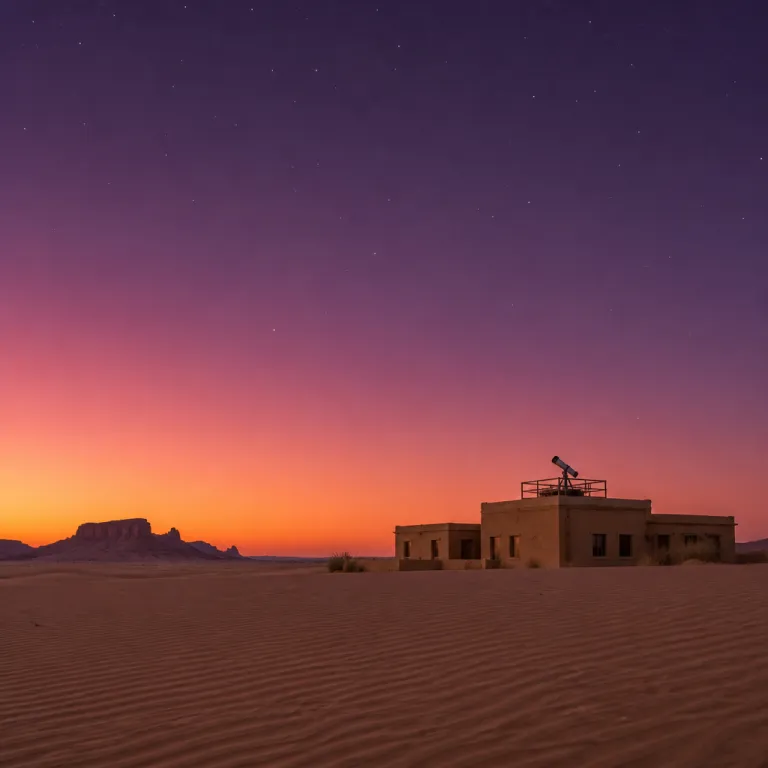
Why Algeria’s Sahara is built for serious stargazing
The phrase sahara stargazing algeria astrotourism sounds niche, yet the reality on the ground is vast. Algeria’s Sahara desert stretches over two million square kilometres, and much of this southern expanse sits far from city lights and traffic. That distance from northern urban centres creates naturally dark skies where the night sky feels almost physical above you.
Altitude, aridity and sky clarity work together here in a way that seasoned astronomy travellers immediately recognise. Around Djanet, Tassili n’Ajjer and the Hoggar Mountains near Tamanrasset, the air is consistently clear and the humidity is low, so the milky band of our galaxy cuts sharply across the sky. Mount Tahat, the country’s highest peak at about 2,908 m, adds elevation that further sharpens transparency. These conditions hold year round in many zones, which means astro tourism in the sahara desert can be planned around moon phases and meteor shower calendars rather than worrying about clouds.
Astrotourism, defined simply as traveling to observe celestial events and night skies, finds one of its best natural laboratories in Algeria. The country’s southern plateau and dune seas function like an informal sky reserve, with light pollution levels that would likely qualify for international dark sky recognition if formally measured; satellite-based maps from projects such as the World Atlas of Artificial Night Sky Brightness already show large areas of the central Sahara in the darkest category. One local guide in Djanet likes to tell guests, “When you see your own shadow by starlight, you understand why we protect this sky.” For luxury travellers booking high end desert camps, that means you can step from a linen dressed bed straight into guided stargazing sessions that rival experiences in any southern hemisphere national park.
Where to go: from Tassili n’Ajjer to Timimoun’s dunes
For sahara stargazing algeria astrotourism, three regions stand out as consistently exceptional. Tassili n’Ajjer National Park near Djanet combines cathedral like sandstone formations with a natural dark sky amphitheatre, and the absence of nearby city lights turns every clear night into a private observatory. This UNESCO listed national park, inscribed in 1982 for both its geological value and more than 15,000 rock engravings and paintings, is also a cradle of prehistoric rock art, so your guided tour can move from ancient hunters painted on stone to the same constellations they once watched.
Further west, the ochre dunes and palm fringed ksour around Timimoun in the Gourara region offer a softer, more oasis based version of the sahara desert. Here, luxury guesthouses and premium lodges arrange stargazing tours that leave after dinner, driving a short distance into the open desert where the night sky arches unbroken from horizon to horizon. The best operators time these excursions to moon phases, ensuring the milky way is visible to the naked eye on dark nights and planning around major showers such as the Perseids in August or the Geminids in December.
In the deep south, the Hoggar massif near Tamanrasset rises like a volcanic fortress, and its elevation sharpens sky clarity for serious astronomy enthusiasts. Many travellers pair a stay here with coastal time in Oran, using refined city bases such as the Four Points by Sheraton, reviewed in detail in our guide to refined coastal comfort in Oran. Overland, the journey from Algiers to Tamanrasset can take several days by road, so most visitors opt for domestic flights that cut travel time to a few hours. From north to south, this combination of mountain, desert and sea shows how astro tourism can sit comfortably within a broader luxury itinerary.
What desert camps really offer stargazers
Algeria’s sahara stargazing algeria astrotourism scene is still young, which is precisely why it feels so authentic. Around Djanet, operators such as Touareg Trips and Messak Art et Tourisme run small scale desert camps where sleeping under open skies is not a gimmick but the default. Canvas walls are low, roofs often retractable, and the line between your bed and the night sky is intentionally blurred.
These camps typically include telescopes, star charts and an on site astronomy guide, so even first time visitors can read the sky like a map. Guided stargazing sessions often begin with a short 4x4 transfer away from camp lights into deeper dark skies, where the milky way, bright planets and occasional meteor shower become easy targets for both the naked eye and long exposure photography. One recent guest described lying on a dune near Djanet and “counting so many shooting stars that I stopped making wishes.” Some partners, such as SS Travel, even use VR previews before the trip, helping guests understand constellations and moon phases before they step into the desert.
During the day, the same guides pivot from astro to culture, leading tours to rock art sites, gueltas and small oasis villages. A typical guided tour might weave dune trekking, tea with Tuareg hosts and a visit to local markets where you can later recognise spices from our feature on Algeria’s spice souks. Permits for protected areas such as Tassili n’Ajjer are usually arranged by your operator in advance, and you will often travel with a licensed local guide as part of the conditions of entry. By night, the camp becomes a quiet sky reserve, with red lights used around tents to preserve night vision and maintain that international dark sky feel.
Planning your stay: seasons, equipment and hotel choices
Thoughtful planning turns sahara stargazing algeria astrotourism from a beautiful idea into a seamless trip. Algeria’s southern regions offer year round potential, but winter and shoulder seasons usually bring the best balance of cool nights, sky clarity and comfortable daytime temperatures. From roughly November to March, nights are long and stable, while summer can be intense in the desert, yet it rewards patient travellers with a high, bright milky way and long dark hours for astro photography.
For equipment, camps generally provide basic telescopes and laser pointers, while serious astronomy guests often bring their own binoculars, tracking mounts and cameras. A headlamp with a red light mode is essential to avoid ruining your night vision, and warm layers are non negotiable because desert nights can be surprisingly cold even when days feel hot. Use a stargazing app to track moon phases and plan around new moon periods, when light pollution is minimal and the night sky becomes a true dark sky dome.
On the accommodation side, many travellers now split their stay between premium city hotels and remote desert camps. Our overview of Algerian hotels to book before peak season highlights properties that pair well with southern itineraries, from Algiers to Oran. This mix allows you to enjoy spa treatments, strong Wi Fi and polished service in the north before flying south to sleep under one of the darkest skies on the continent.
Responsible astrotourism and the future of Algeria’s dark skies
As sahara stargazing algeria astrotourism grows, the way travellers behave will shape the region’s long term appeal. Algeria’s Sahara already hosts several UNESCO listed sites, and the combination of cultural heritage with a naturally dark sky environment demands a light footprint. That means choosing tours that limit vehicle convoys, respect local customs and keep artificial lights to a minimum at night.
Local operators and astronomy guides are increasingly aware that dark skies are an asset as valuable as dunes or rock arches. Many camps now use shielded lamps, encourage red lights after dinner and position tents to avoid unnecessary glow, effectively creating informal sky reserves across the south. The stated goals from regional tourism stakeholders are clear: "Growing interest in astrotourism.", "Integration of VR in tourism.", "Emphasis on sustainable travel."
For travellers, responsible astro tourism also means supporting companies that hire local staff, pay fair wages and invest in training. When you book with operators such as Touareg Trips, SS Travel or Messak Art et Tourisme, you help sustain a knowledge base that keeps guided stargazing and cultural interpretation rooted in the community. In return, you gain access to stories, songs and desert lore that make each night under the sahara desert sky feel less like a product and more like a shared ritual.
FAQ
What is astrotourism in the Algerian Sahara ?
Astrotourism in the Algerian Sahara means traveling specifically to experience the region’s exceptionally dark skies and clear night sky conditions. Travellers join guided stargazing tours in the desert to observe stars, planets and sometimes a meteor shower with the naked eye or through telescopes. It combines astronomy, sahara landscapes and local culture in a single, immersive form of tourism.
Why choose Algeria over other desert destinations for stargazing ?
Algeria offers vast areas of sahara desert with almost zero light pollution and consistently clear skies, especially in the south around Djanet and Tamanrasset. The altitude of the Hoggar Mountains and the remoteness of Tassili n’Ajjer National Park create some of the best dark skies accessible from the northern side of the continent. Compared with more developed destinations, Algeria’s astro tourism scene remains quieter and less crowded, which appeals to independent travellers.
Are there guided tours and astronomy experts available ?
Yes, several local operators run dedicated stargazing tours and broader desert itineraries that include astronomy sessions. Companies such as Touareg Trips, SS Travel and Messak Art et Tourisme work with trained astronomy guides who explain constellations, moon phases and sahara navigation by stars. Many trips follow a simple pattern of evening setup, night observation and early morning return to camp.
What should I pack for a stargazing trip in Algeria’s Sahara ?
Pack warm clothing for cool nights, even if you travel during warmer months, because temperatures drop quickly after sunset. A headlamp with a red light mode, a small pair of binoculars and a power bank for devices will improve your night sky experience without adding much weight. Respectful clothing for visits to oasis towns and rock art sites is also important, as is sunscreen for long days in the open desert.
Is astrotourism in Algeria suitable for solo travellers ?
Astrotourism in Algeria works very well for solo travellers who are comfortable joining small group tours. Desert camps and guided tour operators routinely host individual guests, pairing them with others for 4x4 excursions and night sky sessions. Choosing reputable companies and arranging transfers in advance will ensure a smooth, safe experience from airport to camp and back.