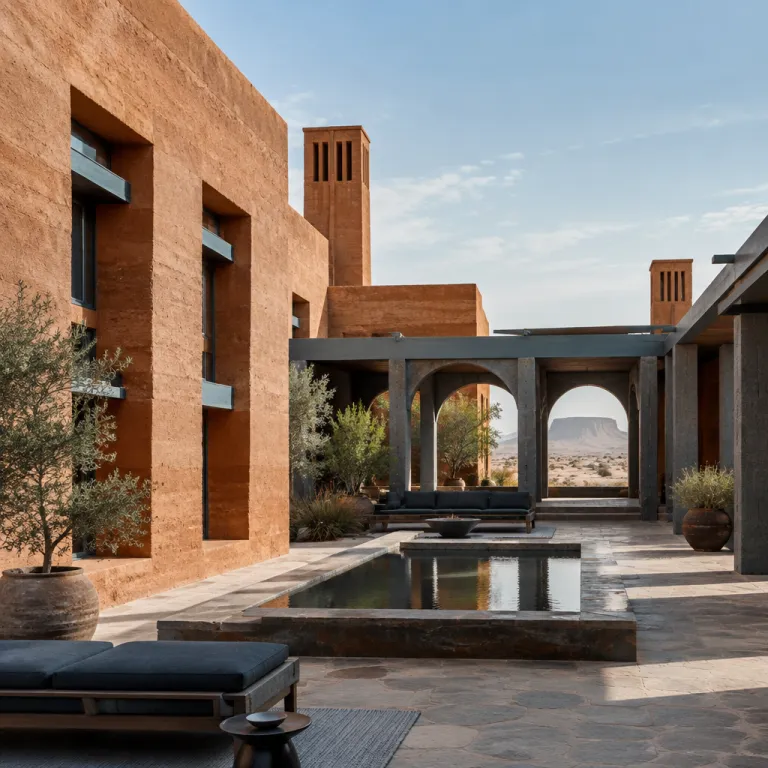
Why saharan architecture still sets the standard for cool luxury
In southern Algeria, the most comfortable desert retreats feel almost cool at midday. Their secret is not aggressive air conditioning, but Saharan architecture that treats heat as a design problem rather than an enemy. For travelers comparing climate-smart desert hotels and passive cooling suites in Algeria on myalgeriastay.com, understanding this logic will help you choose properties where comfort feels effortless.
Across the Sahara, traditional buildings use thick earth or stone walls to slow the flow of heat, and this thermal mass keeps indoor temperatures far more stable between day and night. In many historic ksour, external walls reach 50–80 cm in thickness, which can limit indoor temperature swings to around 6–8°C over a full summer day instead of the 20°C variations outside. Architects working in this climate context orient each building carefully to the sun and prevailing winds, then use compact volumes and introverted courtyards to reduce heat gain while still pulling fresh air through shaded patios. In the best luxury hotels, design starts with these passive strategies, and only then adds discreet mechanical cooling as a backup rather than the main act.
French Algerian architect Fernand Pouillon became a reference because he blended vernacular forms with modern comfort, proving that refined architectural language and climate intelligence can coexist. His work at the Ghardaïa tourism complex and the Hôtel El-Djazair extensions in Algiers shows how modest wall opening ratios and a low surface-to-volume figure reduce heat and glare without sacrificing views. Studies of his southern properties, including research published by the École d’architecture d’Alger on bioclimatic design, highlight how carefully calibrated courtyards and shaded galleries keep circulation spaces several degrees cooler than exposed streets. When you walk into contemporary desert retreats inspired by this approach in Algeria today, you feel the difference immediately in the stillness of the air, the softness of the light and the way the built environment seems to hold the desert at a respectful distance.
How passive cooling actually works in desert retreats
Step into a well designed Saharan suite at noon and the first sensation is calm air, not a blast from a vent. The walls are thick, the windows are recessed under deep shade, and the courtyard outside acts as a cool lung for the entire building. This is passive cooling in practice, and it underpins the most successful desert retreats and luxury eco-lodges in Algeria listed on our guide for discerning travelers.
Traditional desert architecture uses several intertwined strategies to reduce heat before any machine intervenes. Courtyards create vertical shafts where warm air rises and escapes, drawing cooler air through lower openings and setting up gentle cross ventilation that follows local wind patterns. In many Saharan towns, this stack effect can lower courtyard temperatures by 3–5°C compared with nearby exposed plazas at peak sun. Narrow passages, arcades and loggias keep circulation spaces in permanent shade, while flat roofs and carefully placed pools temper the micro climate around guest rooms without heavy mechanical cooling.
Material choice is equally deliberate, because thermal mass is the quiet hero of Saharan comfort. Thick masonry walls absorb daytime heat slowly, then release it back to the environment once the desert night cools, which smooths out temperature swings inside the rooms. A study on earthen construction in Biskra, for example, measured interior temperatures in traditional houses staying below 30°C while outdoor air exceeded 40°C for several hours. When you read the latest news about sustainable hospitality in Algeria, you will notice how often architects now reference these time tested strategies as an alternative to oversized air conditioning systems that fight against the climate context instead of working with it.
Desert retreats in Algeria are increasingly evaluated on how intelligently their buildings manage air, sun and wind rather than on gadget heavy conditioning alone. For a business leisure traveler, that means quieter nights, fewer drafts and a more authentic sense of place. It also means your stay supports an environment friendly approach that respects the desert rather than overwhelming it with energy hungry cooling.
From M'Zab to modern suites: what you will actually feel
Walk through a historic M'Zab settlement and you immediately sense how architecture edits the desert climate. Streets are narrow, walls are high, and every turn seems calibrated to catch or block the wind. Luxury hotels that borrow from this language offer a similar feeling of enveloping comfort, even when the sun is fierce outside.
In these contemporary Saharan-inspired hotels in Algeria, guest rooms often open onto internal patios rather than exposed façades, which reduces direct sun while maintaining airflow. Limited west facing glazing cuts late afternoon heat gain, while carefully placed openings align with prevailing winds to encourage natural ventilation without noise. When mechanical cooling is present, it works in tandem with cross ventilation and shading, so the air conditioning can run at gentler settings and maintain a more stable indoor climate.
Properties in the Ahaggar region, for example, often use layered façades that act like a double skin, with perforated outer walls casting intricate shade over solid inner shells. This architectural approach creates a buffer zone where hot air can rise and escape, which helps reduce heat before it reaches the main building envelope. Field measurements from similar double-skin systems in hot arid climates show surface temperature reductions of 8–12°C on shaded inner walls compared with fully exposed façades. When you compare this to a glass heavy resort that relies entirely on mechanical cooling, the difference in acoustic comfort, light quality and connection to the desert landscape is striking.
Our guide to elegant stays in the Ahaggar mountains highlights properties where design starts with climate rather than décor. As a guest, you feel this in the way corridors remain cool without aggressive conditioning, and in how terraces stay usable even in the middle of the day. The built environment is not fighting the Sahara; it is tuned to its rhythms, which will help you rest better between meetings and excursions.
How to read a desert hotel: a practical checklist
When you scroll through myalgeriastay.com looking for a desert retreat, pay attention to the architecture before the amenities list. Ask how the building sits in its environment, and whether its form suggests protection from sun and wind or exposure to them. A few visual cues will quickly tell you whether a property understands Saharan logic or merely decorates it.
Look first at the massing of the buildings and the proportion of solid walls to openings, because compact forms with limited glazing usually perform better in this climate context. Deeply recessed windows, continuous shade devices and internal courtyards all signal a commitment to passive strategies that reduce heat gain. If you see references to double skin façades, thick masonry and shaded circulation, you can expect more stable indoor temperatures and less reliance on mechanical cooling throughout the day.
Next, consider how the hotel handles air and wind patterns across the site. Descriptions that mention courtyards aligned with prevailing winds, or pools and gardens placed to cool incoming air, indicate that design starts with micro climate rather than afterthought conditioning. When architects talk about cross ventilation, thermal mass and controlled sun exposure, they are explaining how the building will help maintain comfort with minimal air conditioning, which is exactly what you want in a high-end Saharan hotel that prioritises passive cooling in Algeria.
Finally, read between the lines of marketing language to see whether the property treats the desert as a backdrop or as a partner. Hotels that reference local artisans, traditional construction techniques and heritage organisations are usually more serious about the built environment than those that focus only on spa menus. For a business leisure traveler, choosing such a place means quieter rooms, more nuanced light and a stay that feels rooted in Algeria rather than interchangeable with any other desert resort.
Why passive design matters for sustainability and luxury
Luxury travelers increasingly expect both comfort and environmental responsibility from high end hotels. In the Sahara, those two ambitions converge in passive cooling, because every kilowatt saved on air conditioning translates into quieter spaces and a lighter footprint. The most compelling climate-responsive desert hotels in Algeria show that you do not need to sacrifice indulgence to respect the desert.
By relying on thermal mass, shade and intelligent ventilation, these buildings reduce heat loads before any mechanical system switches on. That means smaller chillers, fewer ducts and less intrusive equipment, which in turn preserves the clarity of the architectural experience. Guests enjoy thick, cool walls, filtered daylight and still air, while the environment benefits from lower energy consumption and reduced strain on local infrastructure.
There is also a cultural dimension, because passive strategies reconnect contemporary hospitality with centuries of Saharan know how. When a hotel commissions local architects and artisans to create courtyards, arcades and carved screens, it supports living traditions rather than importing generic solutions. For travelers interested in regional craft, pairing a stay with a visit to Algeria's weaving heritage through our feature on the carpets of the Aurès offers a deeper understanding of how design and climate have always been intertwined here.
In this context, the latest news in Algerian hospitality is less about gadgets and more about a revival of bioclimatic thinking. Partnerships between tourism authorities and heritage organisations encourage hotels to reduce heat gain, harness prevailing winds and use double skin façades where appropriate. For the business leisure traveler, choosing such properties is a quiet but meaningful way to support a more sustainable built environment while enjoying some of the most atmospheric suites in North Africa.
FAQ
What materials help cooling in Saharan hotels?
Thick earth or stone walls with high thermal mass are the primary materials that help cooling in Saharan hotels. These walls slow down the transfer of heat from the outside to the inside during the day. At night, they release stored heat back to the cooler desert air, which stabilizes indoor temperatures.
How do courtyards help comfort in desert hotels ?
Courtyards improve comfort by creating shaded, ventilated outdoor rooms at the heart of the building. Warm air rises and escapes through the open top, drawing cooler air through lower openings and generating a gentle stack effect. Guests experience lower temperatures, softer light and a more private, tranquil environment.
Why do well designed Saharan hotels limit openings on façades ?
Limiting openings on façades reduces direct solar gain and glare, which are major sources of indoor heat in a hot arid climate. Smaller, recessed windows under deep shade allow controlled daylight and views without overheating the rooms. This strategy also improves privacy and reduces dust infiltration from desert winds.
How can I tell if a hotel uses passive cooling before I book ?
Look for descriptions of thick masonry walls, internal courtyards, shaded walkways and natural ventilation in the hotel information. Photos showing deep window reveals, narrow lanes between buildings and limited glass on sun exposed sides are also strong indicators. If the property highlights reduced reliance on air conditioning and references to Saharan or M'Zab inspired design, it likely uses passive cooling.
Are passive cooled luxury hotels as comfortable as fully air conditioned ones ?
In Saharan climates, well designed passive hotels can feel more comfortable than glass heavy properties that rely only on mechanical cooling. Temperatures are more stable, air is less dry and noise from equipment is reduced, which improves sleep quality. Many luxury guests appreciate the quieter, more natural atmosphere, especially when mechanical systems are used only as a subtle complement.