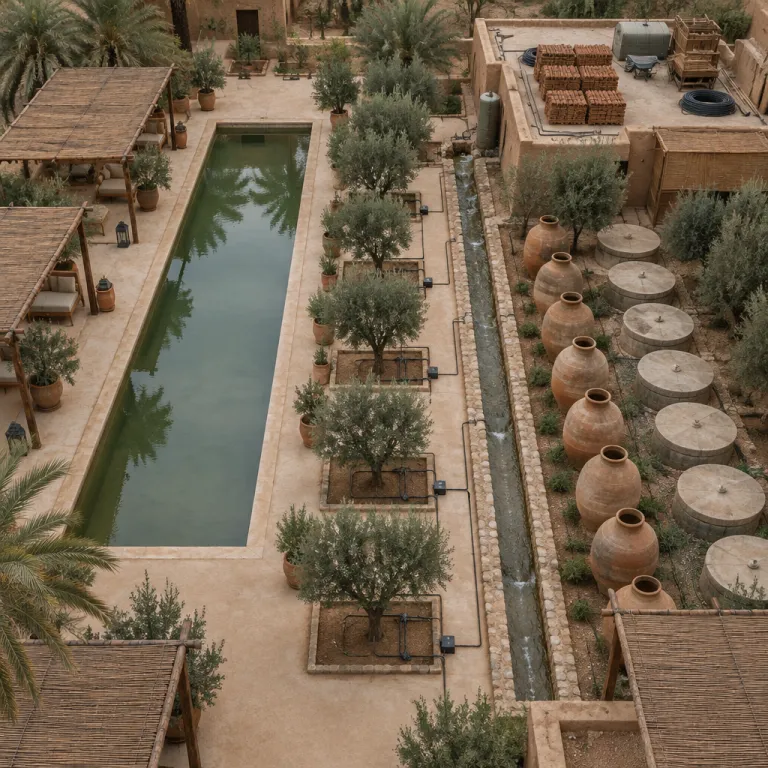
Why water defines sustainable luxury in the Algerian desert
In Algeria, the desert is not a backdrop; it is the main character. For luxury tourism, the Algerian Sahara forces every hotel to treat water as a strategic asset, not a decorative feature. Any traveler who has watched the sun rise over the dunes understands that comfort here must be sustainable or it will not last.
Across the Sahara Desert regions, new hotels and traditional guest houses compete to attract high-end travelers with pools, misted terraces, and lush gardens. Yet these same tourist destinations sit above fragile oasis aquifers, where water management has shaped local communities and cultural life for centuries. In the Gourara region around Timimoun, for instance, a 2021 study by Algeria’s National Agency for Water Resources (ANRH) estimated that groundwater recharge is often below 10% of annual extraction, underlining how tight the margin really is. The tension between guest expectations and ecological limits is now the defining question for sustainable tourism in the Algerian tourism sector.
When you plan travel to the Algerian desert, the choice of accommodation becomes a vote on what kind of tourism development you want to support. Some hotels and resort complexes still chase a coastal-style aesthetic that ignores climate change and rising carbon emissions. Others are quietly rewriting the rules of desert hospitality, proving that eco-friendly comfort can coexist with low-impact design and serious social responsibility. As one oasis farmer near Ghardaïa put it during a recent regional workshop on tourism and water, “A guest who sleeps under our palm trees must also respect the source that feeds them.”
The pool dilemma: comfort, image, and invisible aquifers
A pool in the Sahara looks effortless in photographs, but every cubic metre of water has a story. In many desert areas of Algeria, that story runs through ancient underground channels, fragile water tables, and local customs that treat every drop as shared wealth. According to figures cited by the Ministry of Water Resources, evaporation in exposed desert basins can exceed 2,000 millimetres per year, meaning that an uncovered pool can lose its entire volume several times annually. When a hotel drills deeper or pumps harder to keep a turquoise rectangle full, the impact ripples far beyond its walls.
Business and leisure travelers often arrive from coastal regions or international hubs where water feels abundant, and they naturally expect resort-style activities around a pool. In the Algerian desert, those expectations collide with the reality that many local communities still rely on traditional irrigation for agriculture and daily life. The most responsible hotels now explain this context clearly, framing any pool as a carefully managed privilege rather than an unlimited amenity for tourists. Some properties display simple infographics showing annual water use, pool evaporation rates, and the share of water recycled on-site to make the trade-offs visible.
On independent inspections in the Sahara Desert, we have seen properties reduce pool sizes, limit refilling, or even replace large basins with shaded plunge pools to cut evaporation. One mid-size lodge near Timimoun, for example, downsized from a 120 m³ pool to a 45 m³ shaded basin and installed a cover, cutting annual water losses by an estimated 60% while maintaining guest satisfaction scores above 9/10 on major booking platforms. These hotels still deliver premium accommodation and refined service, but they design for low impact rather than spectacle. If you want a deeper dive into how different properties handle this balance, our detailed guide to luxury desert retreats in Algeria compares approaches across several key sites.
Oasis intelligence: learning from foggaras and local communities
Long before modern tourism, oasis towns in Algeria mastered water management through foggaras, those gravity-fed underground channels that move water with almost no energy. In the sand dunes around Timimoun, Ghardaïa, and other Sahara regions, these systems shaped where people settled, how palm groves grew, and which areas could support trade. UNESCO documentation on the M’Zab Valley notes that some foggaras have operated for centuries with minimal mechanical intervention, making them one of the most elegant examples of low-impact engineering in any desert.
Today, some of the most interesting hotels and guest houses in the Algerian desert are quietly reconnecting with this heritage. Instead of importing thirsty landscaping, they work with local communities to restore traditional irrigation, plant native species, and align tourism activities with existing agricultural rhythms. One guest house near Beni Isguen, for instance, now channels a small share of foggara flow through its garden, then returns the water to communal basins, documenting a 30–40% reduction in pumped groundwater use over two seasons. This approach turns the hotel into a partner in sustainable tourism rather than a separate tourist enclave.
When you drive the classic oasis route, our recommended Saharan oasis circuit from Ghardaïa to Timimoun shows how different areas interpret this legacy. Some properties channel water from restored foggaras into shaded courtyards, while others use modern pumps but still respect traditional allocation rules. In every case, the most sustainable hotels treat local cultural knowledge as a resource as precious as water itself, often inviting elders or water stewards to explain how distribution schedules protect both palm groves and household wells.
What responsible desert hotels actually do with water
For travelers evaluating Algerian desert hotels and water sustainability, the real test lies behind the scenes. Serious properties start with rigorous water management, from low-flow fixtures in every room to greywater reuse for gardens and cleaning. A 2020 pilot program in southern Algeria, coordinated with the national tourism authority, found that installing aerators and dual-flush toilets in mid-range hotels reduced per-guest water use by 25–35% without lowering comfort. Leading properties now track consumption per guest night and adjust operations seasonally to match the capacity of local aquifers.
Food waste is another quiet but critical front line, because every kilogram of wasted food represents hidden water and carbon emissions. The best hotels and resort-style properties in the Sahara Desert design menus around seasonal produce from nearby regions, reduce buffet excess, and train their équipe to repurpose leftovers safely. One desert eco-lodge near El Menia reported cutting buffet waste by 40% after switching to made-to-order breakfasts and smaller serving dishes, while increasing local sourcing to more than 70% of ingredients by value. This approach supports local farmers, cuts transport-related emissions, and aligns luxury dining with eco-friendly practice rather than excess.
Social responsibility also shows up in how a hotel engages with local customs and employment. Properties that hire and train Algerian staff from surrounding areas, respect prayer times, and integrate cultural activities into the guest experience tend to think more holistically about sustainable tourism. In a 2022 survey by a regional tourism association in Ghardaïa, hotels that invested at least 20 hours of annual training per employee on environmental and cultural topics were also the ones most likely to monitor groundwater levels and publish basic sustainability indicators. When a manager talks about tourism development in the same breath as aquifer health and community needs, you are usually in the right place.
How travelers can support low impact water practices
As a business or leisure traveler, you have more influence than you might think. Before you book accommodation in the Algerian desert, read property descriptions carefully and look for explicit references to water management, eco-friendly systems, and support for local communities. If a hotel in the Sahara highlights only pools and imported greenery, ask direct questions about how those features affect nearby areas. A brief email requesting figures on annual water use, share of greywater reuse, or percentage of local staff often signals that guests are paying attention.
On arrival, small choices compound into meaningful sustainable tourism outcomes. Shorter showers, reusing towels, and declining daily linen changes reduce pressure on fragile desert water supplies without diminishing comfort. Choosing guided activities that respect local customs, such as walks through palm groves or visits to traditional irrigation sites, also channels your spending toward tourism sector actors who value conservation. In several oasis towns, local associations now offer tours where part of the fee funds foggara maintenance or palm grove restoration, turning your excursion into direct support for water-wise practices.
Many travelers now compare destinations through a sustainability lens, sometimes contrasting Algeria with places like Costa Rica that market eco credentials aggressively. Algeria’s Sahara regions may be quieter in global tourism marketing, but the underlying water wisdom is deep and authentic. If you want a broader sense of how this ethos extends beyond the desert, our feature on autumn in Kabylie and the Djurdjura villages shows similar respect for land, seasons, and community, with harvest festivals and mountain guest houses adapting their own water and energy use to local rhythms.
Choosing where to stay: a practical checklist for water wise luxury
When you compare hotels in Algeria’s desert regions, start with location and scale. Smaller guest houses embedded in existing oasis towns often integrate more naturally with local water systems than isolated mega projects in exposed sand dunes. That does not mean large hotels cannot be sustainable, but it raises the bar for how they manage resources and engage with surrounding communities. A 2019 assessment by a Saharan planning institute noted that compact, courtyard-based buildings can cut outdoor water demand for landscaping by up to half compared with sprawling resort layouts.
Next, read between the lines of sustainability claims, because not every eco label reflects serious practice. Look for specific references to low-impact design, such as shaded courtyards instead of vast lawns, native planting instead of thirsty exotics, and clear policies on food waste reduction. Ask whether the property measures its carbon emissions, supports local suppliers, and invests in training for Algerian staff on environmental and cultural topics. Hotels that publish even simple metrics—like litres of water used per guest night or percentage of wastewater treated and reused—tend to have stronger internal systems than those relying only on generic green slogans.
Finally, consider how your own travel patterns intersect with water use in the Sahara Desert. Combining meetings and leisure nights in a single trip reduces flights and spreads your spending across more tourist sites and activities, which can support local tourism development more evenly. Algeria will never be Costa Rica, and it should not try to be; its strength lies in a quieter, more grounded form of sustainable tourism where water, culture, and hospitality remain inseparable. Choosing water-wise accommodation is one of the most direct ways to keep that balance intact for future travelers and for the communities who call the desert home.
FAQ
How can I tell if a desert hotel in Algeria uses water responsibly?
Look for clear information on water management, such as low-flow fixtures, greywater reuse, and limits on pool size or refilling. Responsible hotels often explain how they work with local communities and traditional irrigation systems in the Algerian desert, sometimes citing basic figures like litres of water used per guest night or percentage of landscaped area irrigated with recycled water. If details are vague, email the property and ask specific questions about their practices.
Are pools always a bad sign in Sahara desert hotels?
A pool is not automatically unsustainable, but its design and management matter. Smaller, shaded pools with strict refill policies and efficient filtration have a lower impact on desert water resources. Large, exposed pools surrounded by thirsty lawns usually signal higher stress on local aquifers and less sustainable tourism choices. Asking whether the pool is covered at night and how often it is drained can give you a quick sense of its real footprint.
What questions should business travelers ask before booking in the Algerian Sahara?
Ask how the hotel sources its water, manages food waste, and supports local suppliers. You can also request information on carbon emissions tracking, staff training on local customs, and any partnerships with nearby communities. Properties that answer confidently and share at least a few concrete indicators—such as the share of staff hired locally or the proportion of greywater reused—tend to take social responsibility and environmental impact seriously.
Is Algeria as advanced as Costa Rica in eco friendly tourism?
Algeria does not market eco tourism as aggressively as Costa Rica, but many Sahara regions have long traditions of low-impact living and careful water use. Some hotels and guest houses now build on this heritage with modern sustainable practices, including basic monitoring of groundwater levels and participation in local conservation projects. The best approach is to evaluate each property individually rather than judging the entire tourism sector by branding alone.
Can luxury and sustainability really coexist in the Algerian desert?
They can, when hotels design around the limits of water and climate instead of fighting them. High-quality accommodation, attentive service, and refined food are compatible with low-impact systems and support for local communities. The properties worth championing prove that comfort in the desert does not require ignoring its scarcest resource, and that a well-managed oasis can offer both serenity for guests and security for the people who depend on it year-round.